

Company Profile
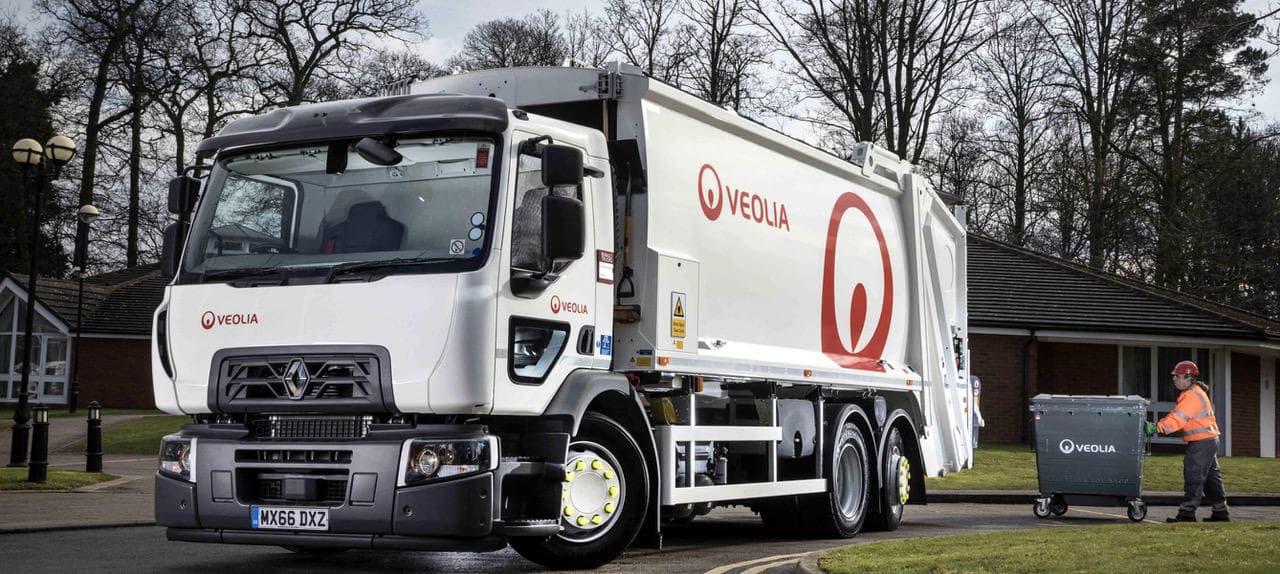
Founded in 1853, Veolia is the world’s leading environmental services company. Operating across five continents in 56 countries with 215,000 employees, Veolia delivers essential services across three interconnected domains: water management, waste management, and energy services. In 2024, the group provided drinking water to 111 million people, treated 65 million tonnes of waste, and produced 42 million megawatt hours of energy — generating consolidated revenue of €44.7 billion.
Industry
Professional Services
Company Size
>215K
HQ Location
France
Business Challenge
1. Fragmented Data Across Systems Blocks End-to-End Visibility
Veolia’s operational data was scattered across multiple disconnected systems, each supporting a different business process — sales, field operations, safety reporting, and logistics — with no unified view connecting them. Tracking the status of bids, service delivery, or compliance incidents required navigating multiple platforms, and aggregating information for management reporting was a labor-intensive, error-prone process.
2. Cumbersome Service Console Limits Dispatch and Contractor Coordination
The existing service console was not built for the operational demands of Veolia’s field-intensive business. It lacked dedicated capabilities for dispatching field contractor teams and managing transport contractor workflows, forcing teams to rely on manual workarounds and off-system coordination. When safety or environmental incidents occurred, the absence of structured dispatch tools and SLA-based workflows meant that response times were slower than they needed to be — and tracking resolution progress was inconsistent.
3. Lack of System Integration Creates Data Silos and Hinders Collaboration
Without seamless integration between its CRM, service management, and legacy warehouse information management systems, Veolia’s teams operated in functional silos. Sales, operations, safety, and logistics each had their own data — but none of it flowed freely between functions. This fragmentation meant that cross-team collaboration was difficult, information sharing was delayed, and the overall picture of business performance remained incomplete. For a company managing complex, multi-disciplinary environmental contracts at global scale, this lack of integration was a significant barrier to operational excellence and business agility.
Neocrm Solution
1. Unified Sales Intelligence Platform for End-to-End Pipeline Visibility
Neocrm consolidated all of Veolia’s sales-related activities into a single, integrated workspace. Bid and tender management, customer visit records, contract renewal tracking, and competitor intelligence — previously scattered across separate tools — are now managed in one unified environment. Sales teams have a comprehensive, real-time view of every customer relationship and deal stage, enabling more consistent pipeline management and more informed strategic decisions.
2. Centralized Incident Management with SLA-Driven Dispatch Workflows
Neocrm’s Service Cloud standardized how Veolia captures, tracks, and resolves safety and environmental incidents. All reporting now flows through a single, structured platform — ensuring that no incident is missed and every case is documented consistently. When an incident is reported, the system automatically initiates SLA-based dispatch workflows, routing field contractor teams to site with clearly defined response targets and escalation paths.
3. Deep Integration with Legacy Systems for a Fully Connected Operation
Neocrm’s Partner Cloud was integrated with Veolia’s existing legacy warehouse information management systems, creating a seamless, end-to-end view of operations and inventory across the business. This integration tears down the data silos that had long separated sales, operations, safety, and logistics teams — enabling real-time information sharing and meaningful cross-functional collaboration.
Result
Since implementing the Neocrm platforms, Veolia has achieved a step-change in how its teams operate across sales, service delivery, safety management, and logistics. What was once a fragmented landscape of disconnected systems and manual processes has been replaced by an integrated, intelligent operating environment — one that gives every team a clear, consistent view of the business in real time.
On the commercial side, sales teams now manage the entire customer lifecycle — from initial bid to contract renewal — within a single platform. This has sharpened pipeline visibility, strengthened data consistency, and enabled more strategic, data-driven engagement with customers. Deal tracking that previously required manual reconciliation across multiple tools now happens automatically, freeing up time for higher-value selling activity.
Equally transformative has been the impact on safety and environmental incident management. With SLA-driven dispatch workflows now in place, field contractor teams are mobilized faster and with greater coordination — improving incident response times and reducing compliance risk. Managers have full auditability over every case from first report to resolution, replacing the opacity of manual tracking with accountability at every step.
Perhaps most significantly, the integration with Veolia’s legacy warehouse systems has fundamentally changed how cross-functional teams work together. Sales, operations, safety, and logistics now share a live, unified view of operational data — enabling the kind of seamless collaboration that complex, multi-disciplinary environmental contracts demand.